Discover.
Entertain. Live. Asorock
Hausa Origins: Daura, City-States, Trade, and the Making of Hausaland
Beyond one ancestor story, Hausa identity grew through language, towns, markets, Islam, political memory, and centuries of connection across northern Nigeria and southern Niger.
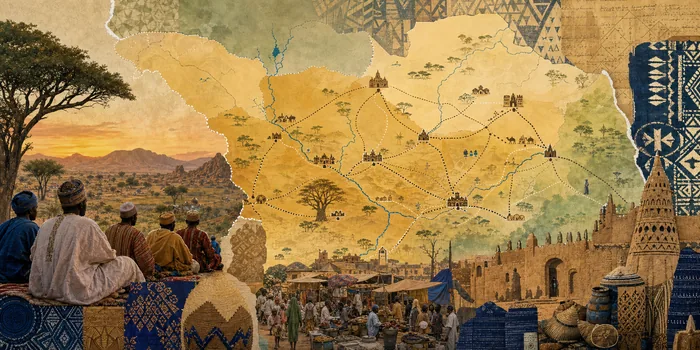
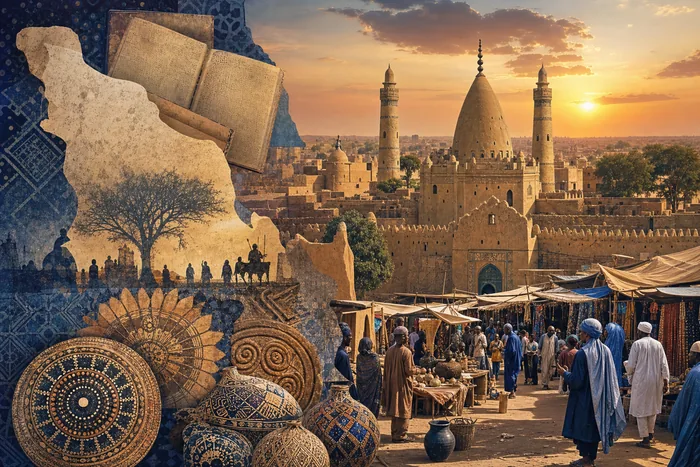
Ask many people where Hausa origins begin, and Daura quickly enters the conversation: Bayajidda, Queen Daurama, the serpent, and the famous well. That story matters. It carries memory, legitimacy, and belonging. But Hausa history is wider than one heroic tale. It is also a story of Chadic language roots, savanna towns, walled cities, caravan routes, scholars, craftsmen, rulers, farmers, migrants, and neighbours who shaped a broad Hausa-speaking world over time.
Begin With The Question, Not A Verdict
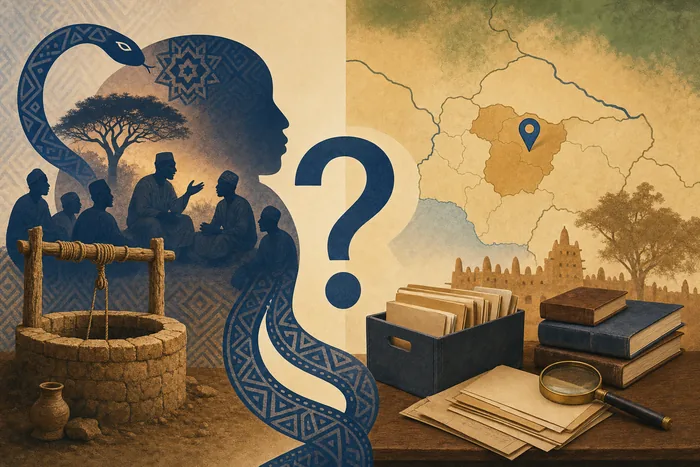
Did Hausa people begin with Bayajidda? One famous tradition says a traveller from the east came to Daura, killed the serpent at the well, married the ruler, and became linked to the founders of the Hausa Bakwai.
For a visual origin story, the key is balance: Bayajidda is central to Hausa political memory, especially around Daura, but the tradition should not be treated as literal proof that all Hausa people descend from one man.
Hausaland Is A Zone, Not A Single Starting Point
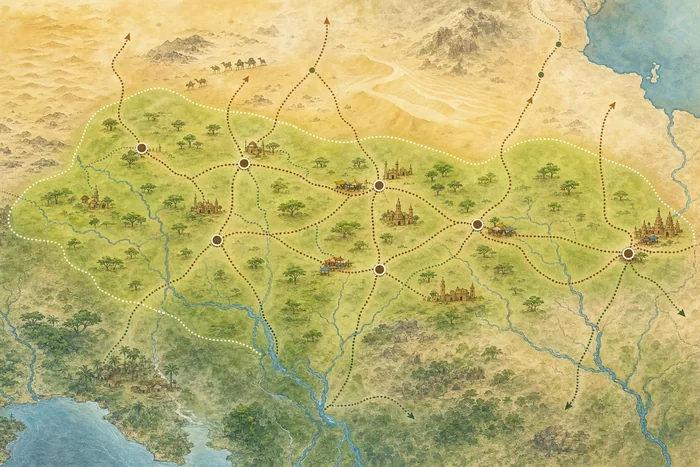
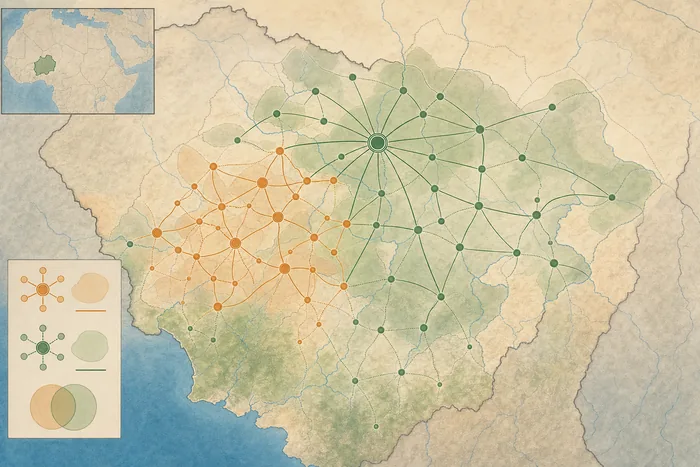
Available sources describe Hausa identity as historically layered and heterogeneous. Across northern Nigeria and southern Niger, Hausa-speaking communities grew through settlement, trade, intermarriage, political change, and contact with neighbouring peoples.
A soft-edged map works better than a single arrow. Hausaland was shaped by towns and routes: Daura, Kano, Katsina, Zazzau/Zaria, Gobir, Rano, Biram, Sokoto, Borno connections, and the wider savanna-Sahara world.
Daura: The Symbolic Cradle
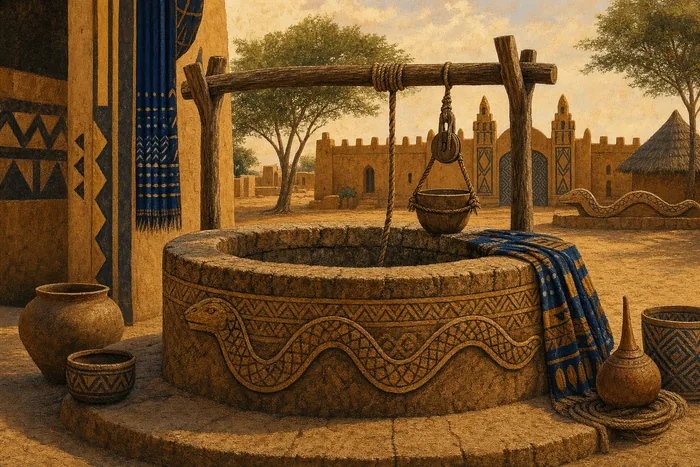
In Hausa oral tradition, Daura holds special prestige. The Bayajidda story links Daura, Queen Daurama, the Kusugu well, and the remembered genealogy of the Hausa Bakwai.
Historians often read this kind of story as a charter myth: a narrative that explains authority, kinship among states, and political legitimacy. Respecting the tradition does not require flattening it into modern documentary evidence.
The Language Clue: Hausa Is Chadic
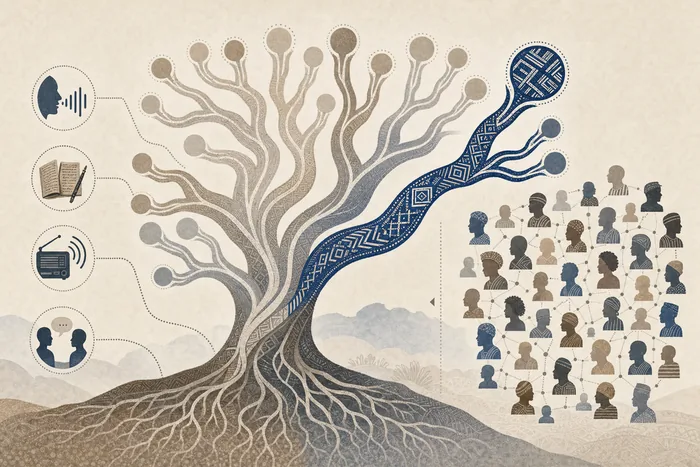
One of the strongest markers of Hausa identity is language. Hausa is classified as a Chadic language within the Afroasiatic language family and is one of West Africa’s major languages.
Language classification is not the same thing as race, DNA, or proof of a recent Middle Eastern origin. It tells us about linguistic relationships, not a single biological ancestry for millions of Hausa people.
The Hausa Bakwai: Seven States In Memory
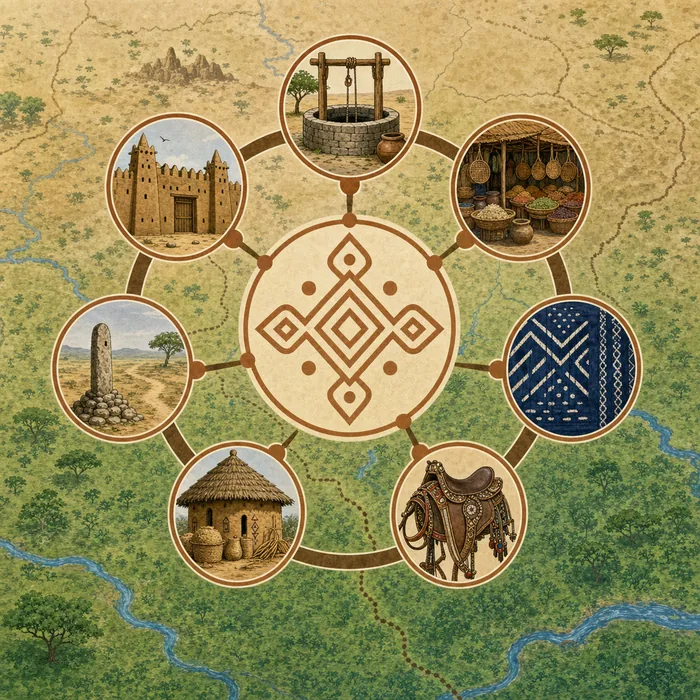
The traditional Hausa Bakwai are commonly listed as Daura, Kano, Katsina, Zazzau/Zaria, Gobir, Rano, and Biram. They were linked by language and shared traditions, but they were not one ancient unified kingdom.
Many historians place the foundations of major Hausa states around the ninth or tenth century CE, though not as exact founding dates for every town. People often identified strongly with their own city-state: Kano, Katsina, Zaria, Gobir, and others.
Archaeology Adds Another Voice
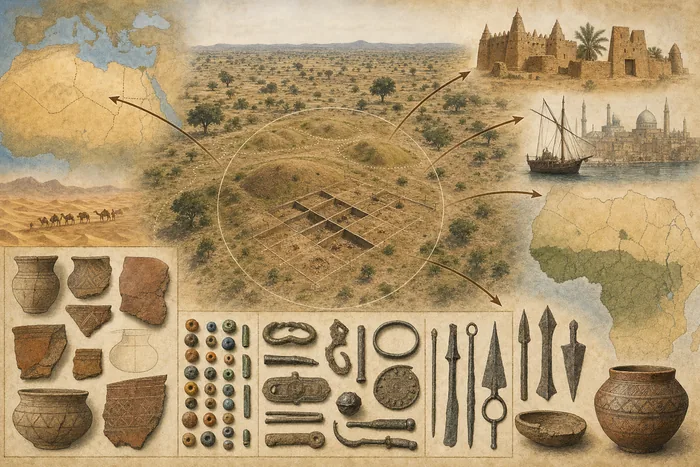
At Durbi Takusheyi, between Katsina and Daura, archaeologists have studied high-status burials linked to early elite formation in the Hausa heartland. The 13th- and 14th-century evidence points to strong local elements alongside long-distance contacts.
This is where material history helps the story breathe. Archaeology does not prove a single origin tale, but it shows that communities in the Hausa heartland were part of wider networks reaching toward Islamic Near Eastern, Mediterranean, Borno, and West African worlds.
Markets, Farms, Walls, And Routes
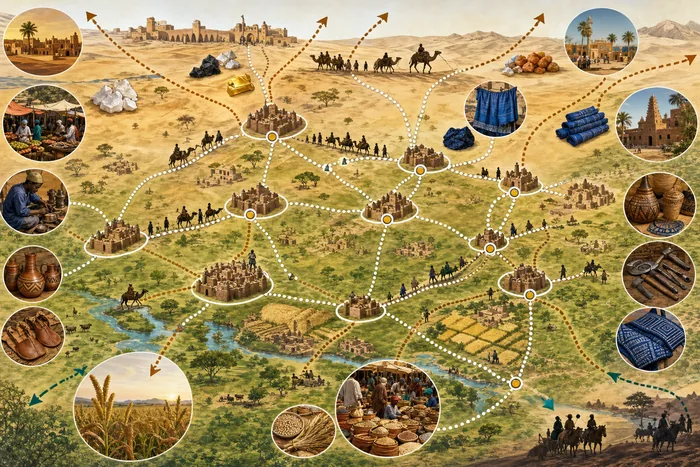
Hausa states grew in fertile savanna zones and along trade routes linking Borno, the Sahara, North Africa, and the western Sudan. Kano, Katsina, Zaria, and Gobir became major powers at different times from the 15th century onward.
This matters because Hausa history is not only royal genealogy or religious history. It is also urban life, agriculture, textile production, crafts, diplomacy, markets, and competition among powerful city-states.
Islam And Scholarship Became Deeply Woven In
From about the 14th century onward, Islam and long-distance trade became increasingly important in Hausaland. Islamic learning, law, diplomacy, and commercial networks shaped many Hausa towns over centuries.
But Hausa identity should not be reduced to religion alone. Sources also point to older and minority religious memories, including Maguzawa and Bori traditions, showing that Islamisation was a long historical process rather than a single switch.
Kano: Craft, Chronicle, And Court Culture
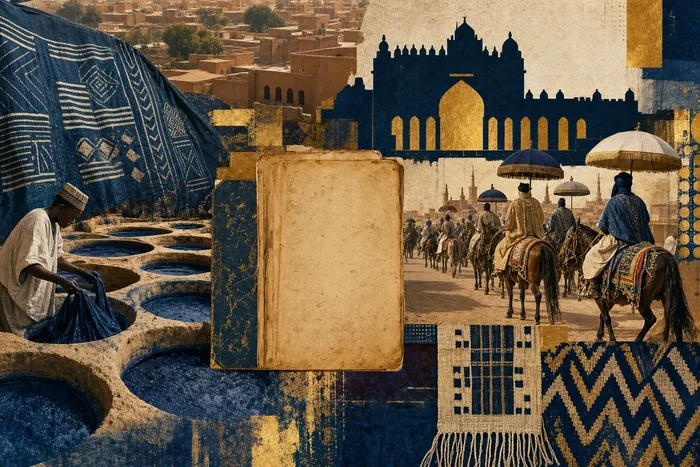
Kano stands out as a major Hausa city-state and commercial centre. It is associated with the Kano Chronicle, the Kofar Mata dye pits, and rich court traditions including royal equestrian processions known in Kano contexts as Hawan Sarki or Durbar.
The Kano Chronicle is important, but historians read it critically because its authorship, date, and relationship to oral tradition are debated. Kofar Mata’s famous indigo heritage is traditionally dated to 1498 in cultural documentation, while modern Durbar forms have also evolved through time.
The Sokoto Caliphate Reshaped The Map
Between 1804 and 1808, the jihad led by Usman dan Fodio created the Sokoto Caliphate and brought Hausa states and neighbouring territories under one central administration for the first time.
This period is essential to later northern Nigerian history, but it needs careful wording. Hausa and Fulani histories became deeply intertwined through Islam, politics, intermarriage, and emirate authority. Still, Hausa and Fulani are not the same ethnic group, and the phrase “Hausa-Fulani” should not erase distinct histories.
Hausa Today Crosses Modern Borders
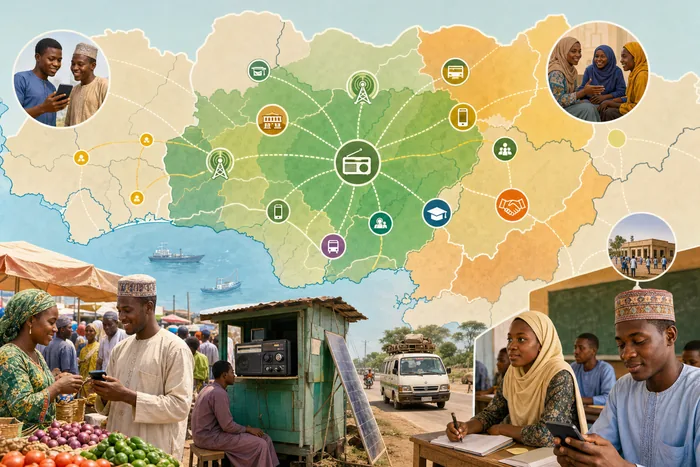
Hausa identity is not confined to Nigeria. Hausa-speaking communities and Hausa cultural influence extend strongly into Niger and across wider West African trade, media, and religious networks.
In 2025, Niger’s charter named Hausa the national language and listed French and English as working languages. That modern language-politics moment reminds us that Hausa is both an old cultural language and a living regional force.
Key Takeaways
- Hausa origins are best understood as a layered formation in Hausaland, not as one confirmed migration from one ancestor.
- The Bayajidda story is central to Hausa origin tradition and Daura’s prestige, but historians treat it as political memory rather than literal proof for all Hausa ancestry.
- Hausa language evidence is important: Hausa is Chadic within Afroasiatic, but language family does not equal biological descent.
- The Hausa Bakwai tradition remembers seven major city-states, yet early Hausa political life was city-based and autonomous, not one ancient unified kingdom.
- Trade, Islam, scholarship, craft production, agriculture, urbanism, migration, and assimilation all helped shape Hausa identity over centuries.
- Hausa and Fulani histories are deeply connected in later northern Nigerian history, especially through the Sokoto Caliphate, but they should not be collapsed into one ethnicity.
What To Watch
Future Hausa-origin work should go deeper into local town histories beyond the big names, especially Rano, Biram, Gobir, Zazzau/Zaria, Katsina, and Daura. Watch also for stronger archaeological research from the Hausa heartland, better public explanation of Maguzawa and Bori memories, and careful coverage of Hausa language politics in Niger and across West Africa.
Sources
- Hausa - African Languages at UCLA, n.d.; accessed October 2, 2026
- Hausa - Encyclopedia.com / Worldmark Encyclopedia of Cultures and Daily Life, n.d.; accessed October 2, 2026
- A History of Nigeria - Cambridge University Press / South African History Online hosted PDF, 2008
- A Historical Whodunit: The So-Called ‘Kano Chronicle’ and its Place in the Historiography of Kano - History in Africa / Cambridge Core, 1994; online 2014
- 500 Years of Tie and Dye Production - Google Arts & Culture / The Centenary Project, n.d.; accessed October 2, 2026
- Progress in the Durbi Takusheyi Burial Project - PanAfrican Archaeological Association, n.d.; accessed October 2, 2026
- Durbi Takusheyi: A high-status burial site in the western Central bilād al-sūdān - Azania: Archaeological Research in Africa / ResearchGate copy, 2012
- Durbi Takusheyi: a high-status burial site in the western central bilād al-sūdān - Smithsonian Libraries and Archives, 2012
- Usman dan Fodio - Encyclopaedia Britannica, n.d.; accessed October 2, 2026
- Niger Adopts Hausa As National Language Replacing French - Channels Television, April 9, 2025
- Le Niger abandonne le français comme langue officielle - TF1 Info / AFP, April 8, 2025
- Hawan Sarki - Kano Emirate Council PDF, 2026; accessed October 2, 2026
More in Nigeria Ethnic Origins
More Summaries
- Top Sports Videos
- Top Music Videos
- Top Entertainment Videos
- Nigeria Festivals A recurring monthly review/tracker of top festivals and cultural events in Nigeria
- Nigeria Sports Stars Timely analysis articles about Nigerian sports stars across all sports, with special depth for...
- Geopolitical Conflict Deep Dive Source-backed deep dives into major geopolitical conflict developments, explaining what happened,...
- News Summaries Nigeria News Summaries is your go-to digest for the latest headlines from Nigeria and beyond. We...